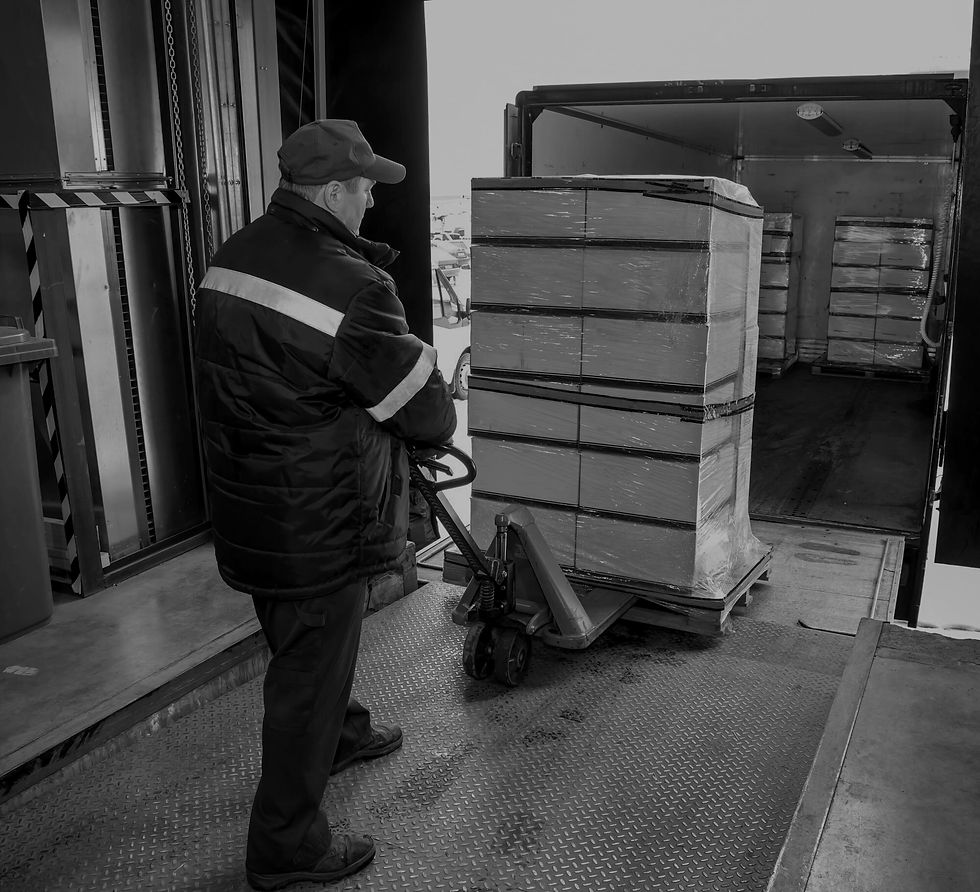
Flooring of workplaces is the treated or untreated surface on which workers stand during their time at work. The definition of a workplace is a location in which work and work-related tasks are done, and as all places have a floor on which people walk, desks and plant are arranged, and the storeys of a building are divided, the flooring of a workplace is a point of consideration when managing occupational health and safety exposures as well as health and wellbeing risks. The flooring of a workplace and the arrangement of the materials of that flooring, including the placement of stairs, ramps, doors which open in different ways, and the arrangement of furniture all influence the use of that space, direct the navigation, congregation, and work of the people within it, and can contribute to safe and sustainable participation by supporting the movement of people, or can introduce risks inadvertently or from the interaction of different factors. Appropriate flooring supports safe, sustainable movement; inappropriate or poorly maintained flooring introduces avoidable risks and can interact with other factors to increase injury rates (Harris & Detke, 2013; Chang et. al., 2016)
Slips, trips, and falls represent one of the largest categories of workplace injury worldwide; up to one in three occupational accidents involves slipping or tripping on contaminated or uneven surfaces (Courtney et. al., 2001). Some workplaces may not have an engineered or crafted floor, and workers may complete their duties standing on dirt, grass, or some other surface. This is common in job roles in agriculture, construction, mining, and in forestry where workers may be working at height, well above the floor. In these cases, workers are working on untreated natural ground whose features are not consistent and which may be obscured. This does not only occur when working outdoors - workers pouring concrete onto steel reinforcement forms may not be able to see the surface on which they are standing, and so may be at increased risk of foot and ankle injuries as well as knee pain from walking awkwardly. Additionally, even when workers can see the floor on which they are standing, dirt, sand, gravel, and other natural non-engineered surfaces can deform under the weight of a worker or plant driving over or working on it. Where surfaces can be deformed, the weights of plant like trucks, cranes, fixtures like impermanent buildings and storage, and even the weather can affect the safety of the ground. In these cases, care must be taken when workers and non-work personnel traverse these areas, given that terrain deformation and the risk of slips and falls owing to ground movement, rain, or some other factor may introduce more health and safety risks.
When considering flooring, the type of flooring used and its arrangement will facilitate different outcomes based on the use of the space. Vinyl, linoleum, and wood floors function differently to polished concrete, grating, and floating floorboards and so contribute to the safety and utilisation of the space as well as the broader total of the work environment. While carpet, wood flooring, and coloured vinyl may lend domestic, calming, and otherwise human character to the room in which work is done, this kind of flooring would be less appropriate in a motor mechanic's office or in a space used for surgery. Similarly, while concrete flooring is more appropriate in areas being traversed by plant, people, and storage, it is commonly used in office buildings where it may be slippery depending on the quality of the finish used, the tread of the shoes walking over that surface, and the ingress of water from the environment or from spillage. Carpets are pleasant and add to the décor of the room, as well as decreasing the ambient noise from footfalls, traversal, and from floors below, but can collect dust, grime, and need to be pressure-washed to ensure their cleanliness, especially in areas of high humidity.
The cleanliness of the floor is a necessarily key consideration given the fact that the floor is where things land, where people walk, and what things are laid on. The floor should be clear of clutter as much as is possible, as well as being cleaned appropriately with the proper solvent to ensure hygiene. Cleanliness is not merely an aesthetic concern; it is a fundamental control measure that directly influences slip resistance, microbial load, and the predictability of the walking surface. Dust, oils, moisture, and debris accumulate through normal business operations, and each of these contaminants alters the frictional characteristics of the floor in ways that may not be immediately apparent to workers (Chen & Qian, 2021). A thin film of dust on polished concrete, for example, can reduce traction to the same extent as a visible spill, while organic residues in food preparation areas can create progressive slickness that worsens over the course of a shift. Regular, methodical cleaning using agents appropriate to the flooring material is therefore essential—not only to maintain hygiene, but to preserve the engineered performance of the surface itself. Regular, methodical cleaning also helps maintain the work environment, adding to the aesthetic support a worker receives when attending to work in a space.
In addition, the timing and method of cleaning must be considered as part of the broader ecosystem of workplace safety. Wet mopping during peak pedestrian flow, the use of overly aggressive solvents that degrade surface coatings, or the failure to dry floors adequately after cleaning can all introduce secondary hazards that undermine the intent of the cleaning process. Floors should be maintained according to a documented schedule that accounts for the nature of the work, the volume of foot traffic, and the environmental conditions that influence contamination and drying times.
Each workplace is different, with different demands, methods of business, and is staffed by people whose capacities, needs, and risk profiles are different. Managing ergonomic, environmental, and occupational health and safety challenges requires a business to examine and engage with the ecosystem of factors that give rise to risk, and how that risk may affect people. Each workplace is different and so sometimes the same problem will require different solutions. This applies to workers as well - every person is different and so may require different support, supervision, or resources to perform comfortably and sustainably. Under Work Health and Safety law, consultation with the workforce, the control of risk as far as is reasonably practicable, and the provision of information, training, instruction and support to the worker by the workplace, is essential to meet obligations to provide workers with a workplace that is as free of risk as far is reasonably practicable.
In our capacity as consultants, Atlas Physio will explore and scope the business and its needs, examining how exposures, risks, and processes contribute to the hazard ecosystem, best inform the design and arrangement of procedural, policy-based, and practical risk controls. Our solutions are tailored to the needs of those with whom we work, implemented in a simple, sustainable, and supportive fashion, designed to be robust and resilient, and to support the ongoing life of the business as well as the sustainable wellbeing of the workers who undertake the day to day activities of work.
Since 2017 and open today, Atlas Physio is happy to provide reporting, structured control, and ongoing management of risk onsite, on the road, and wherever work is done. We are open seven days a week, and are happy to offer a brief complimentary discussion to explore the needs of your business and your workers if you are an employer, and your needs if you are a worker. Reach out today to arrange a discussion and take the first step toward managing risk and working safely, supported by expertise that is practical, reliable, and designed to deliver lasting results.
References
Chang, W. R., Leclercq, S., Lockhart, T. E., & Haslam, R. (2016). State of science: occupational slips, trips and falls on the same level. Ergonomics, 59(7), 861-883.
Chen, L., & Qian, L. (2021). Role of interfacial water in adhesion, friction, and wear—A critical review. Friction, 9(1), 1-28.
Courtney, T. K., Sorock, G. S., Manning, D. P., Collins, J. W., & Holbein-Jenny, M. A. (2001). Occupational slip, trip, and fall-related injuries can the contribution of slipperiness be isolated?. Ergonomics, 44(13), 1118-1137.
Harris, D. D., & Detke, L. A. (2013). The role of flooring as a design element affecting patient and healthcare worker safety. HERD: Health Environments Research & Design Journal, 6(3), 95-119.